
The Mental Load of Modern Parenting (And How to Share It)
The Mental Load of Modern Parenting (And Why It Falls on One Parent)
You remembered the dentist appointment.
You ordered the birthday present.
You signed the permission slip and scheduled the carpool.
Your partner — supportive, helpful, and well-intentioned — didn’t.
Not because they don’t care.
But because someone has to carry the mental load of parenting.
And in many families, that responsibility quietly falls on one person.
Here’s what the mental load actually is and how to measure it.
What the Mental Load of Parenting Actually Is
The mental load of parenting isn’t just doing chores.
It’s the invisible work of planning, remembering, organizing, and anticipating everything that keeps a family running.
Researchers often call this cognitive household labor or invisible labor in parenting.
Examples of the family mental load include:
- Tracking school events and sports schedules
- Planning meals and grocery lists
- Remembering doctor appointments and deadlines
- Coordinating carpools and pickups
- Managing birthday parties and holidays
- Keeping track of permission slips and school communication
Each task may be small.
But together they create a constant background process running in a parent’s mind.
Think of it like project managing a small organization.
Except the organization is your family.
Why the Parental Mental Load Feels So Exhausting
The hardest part of the parental mental load isn’t the tasks themselves.
It’s the constant mental tracking.
Parents carrying the load are always thinking ahead:
- What’s happening next week?
- Who needs a ride to practice?
- Are we out of groceries?
- Did someone sign the field trip form?
- When is the next dentist appointment?
This kind of planning rarely shows up on a to-do list.
But it requires constant attention.
That’s why the mental load of modern parenting often feels so overwhelming.
Why One Parent Often Carries the Family Mental Load
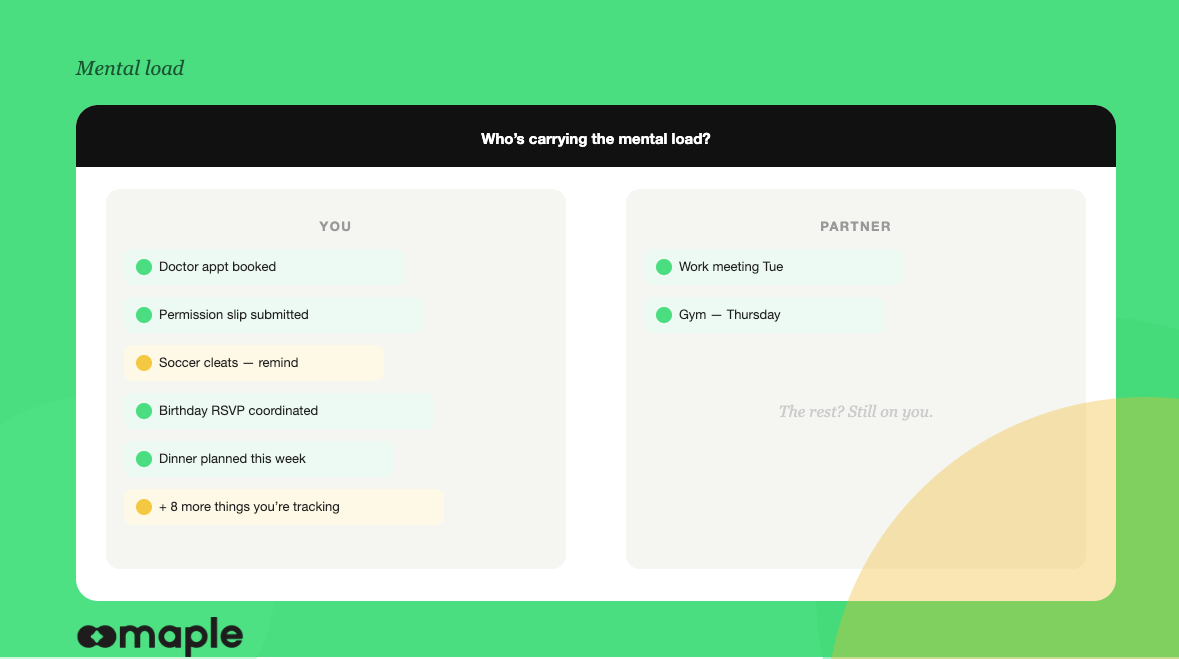
Even in households where chores are shared fairly, the family mental load often isn’t.
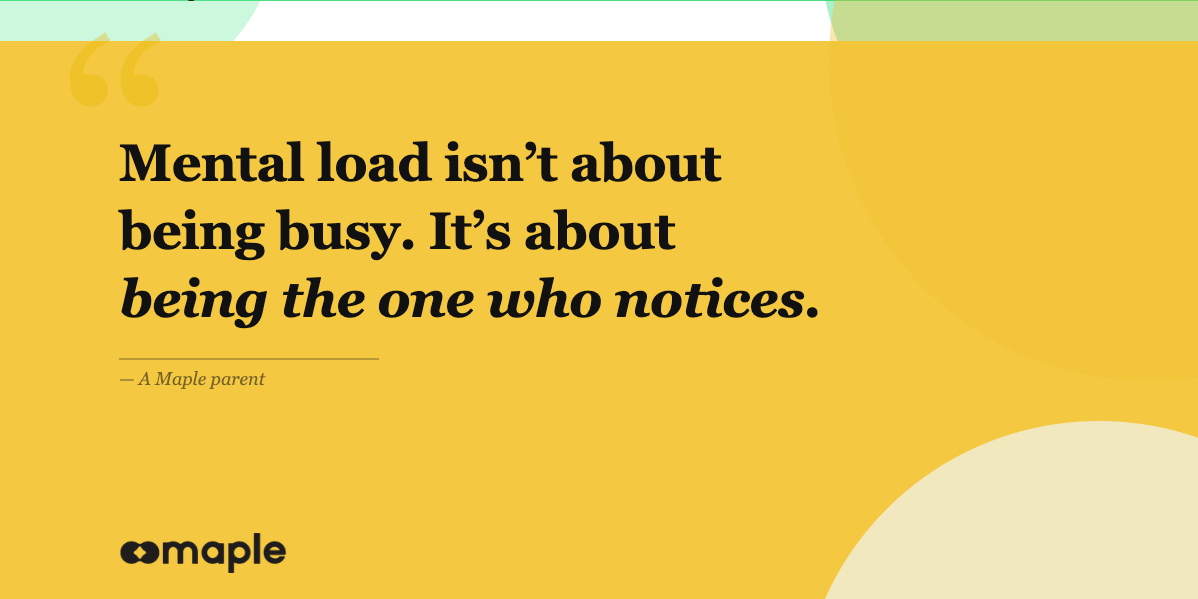
That’s because mental load isn’t about who does the task.
It’s about who:
- Notices the task needs to happen
- Plans when it should happen
- Reminds others if it doesn’t
For example:
Taking the trash out is a task.
Remembering that trash pickup is tomorrow morning is the mental load.
If one parent always tracks those details, the system quietly becomes unbalanced.
Why Modern Family Life Increased the Mental Load
The mental load of parenting has grown significantly in modern families.
Today’s households juggle:
- Two working parents
- Multiple kids with activities
- School apps and communication platforms
- Sports schedules and carpools
- Meal planning and grocery logistics
- Family travel and social calendars
Modern family life operates like a small organization.
But most families manage it with a mix of:
- text messages
- shared calendars
- group chats
- sticky notes
- mental reminders
Which means one parent often becomes the default family logistics manager.
The Hidden Cost of Carrying the Mental Load
When one parent carries the mental load of parenting, it often creates tension.
Not because partners don’t want to help.
But because the invisible work of planning isn’t visible.
That’s why many families hear conversations like:
“I didn’t know that was happening.”
“You should have told me.”
“Why do I have to remember everything?”
Over time, the family mental load becomes one of the biggest sources of stress in modern parenting.
How Families Can Reduce the Mental Load
The solution isn’t simply “help more.”
The real solution is shared systems and shared visibility.
Families who manage logistics well typically do three things.
1. Make the Family Plan Visible
Everyone can see the schedule.
No one parent has to hold it all in their head.
2. Keep Family Logistics in One Place
Calendar events, tasks, meals, and activities live in one system instead of scattered apps.
3. Let Systems Handle the Reminders
When reminders and coordination happen automatically, the mental load gets lighter.
Not sure where the imbalance is? Take the free Mental Load Calculator to see your number.

How Maple Helps Reduce the Mental Load of Parenting
Maple was designed around a simple idea:
Family life shouldn’t require one parent acting as the operating system.
Instead of juggling multiple tools, Maple brings family coordination into one shared system.
With Maple, families can:
- Manage a shared family calendar
- Track tasks and responsibilities
- Plan meals and grocery lists
- Add events with the AI family assistant
- Upload screenshots or files and have them automatically organized
Instead of one parent remembering everything, the system helps the whole family stay coordinated.
👉 Learn more about how Maple works
The Real Goal Isn’t Perfect Organization
Reducing the mental load of modern parenting isn’t about perfect planning.
It’s about freeing up mental space.
Less time tracking logistics.
More time being present with your family.
Because the real win isn’t a perfectly managed household.
It’s a family life that runs smoothly — without one parent carrying it all.





Ready to get your family organized?
Bring clarity and calm to everyday family planning with one shared space for emails, events, tasks, and meal plans.